
The short answer
A material certificate for CNC turned parts usually starts with the bar supplier, not the machine shop. Three kinds reach a turning shop: a mill certificate (also called a mill test report, MTR) from the plant that made the bar, a distributor certificate from the stockist that sold it, and a generic certificate with typical values. Mill and most distributor certificates carry a heat number, the number that ties the paper to one melt of metal; a generic one does not. So if you need traceability, say so at quotation, then check the grade, standard, size and heat number on what you receive.
A note on who wrote this: we are a CNC turning factory in Dongguan, China. To write this guide we went through our purchasing department’s archive of supplier certificates and found all three kinds. Jump to the certificate checklist How we inspect turned parts
Three kinds of certificate, and what each proves
A mill certificate reports the chemistry and mechanical tests of one heat, signed by the producer. A distributor certificate re-issues those results under the stockist’s name, usually with the heat number, and should say that the chemistry comes from the mill certificate. A generic certificate gives typical values for the grade and leaves the heat and lot number blank, so it shows what the grade should be, not what your batch is. In EN 10204 terms, a 3.1 certificate reports tests on the product supplied, validated by an inspector independent of production; a type 2.2 reports the maker’s non-specific tests. A generic sheet of typical values from a stockist is neither.
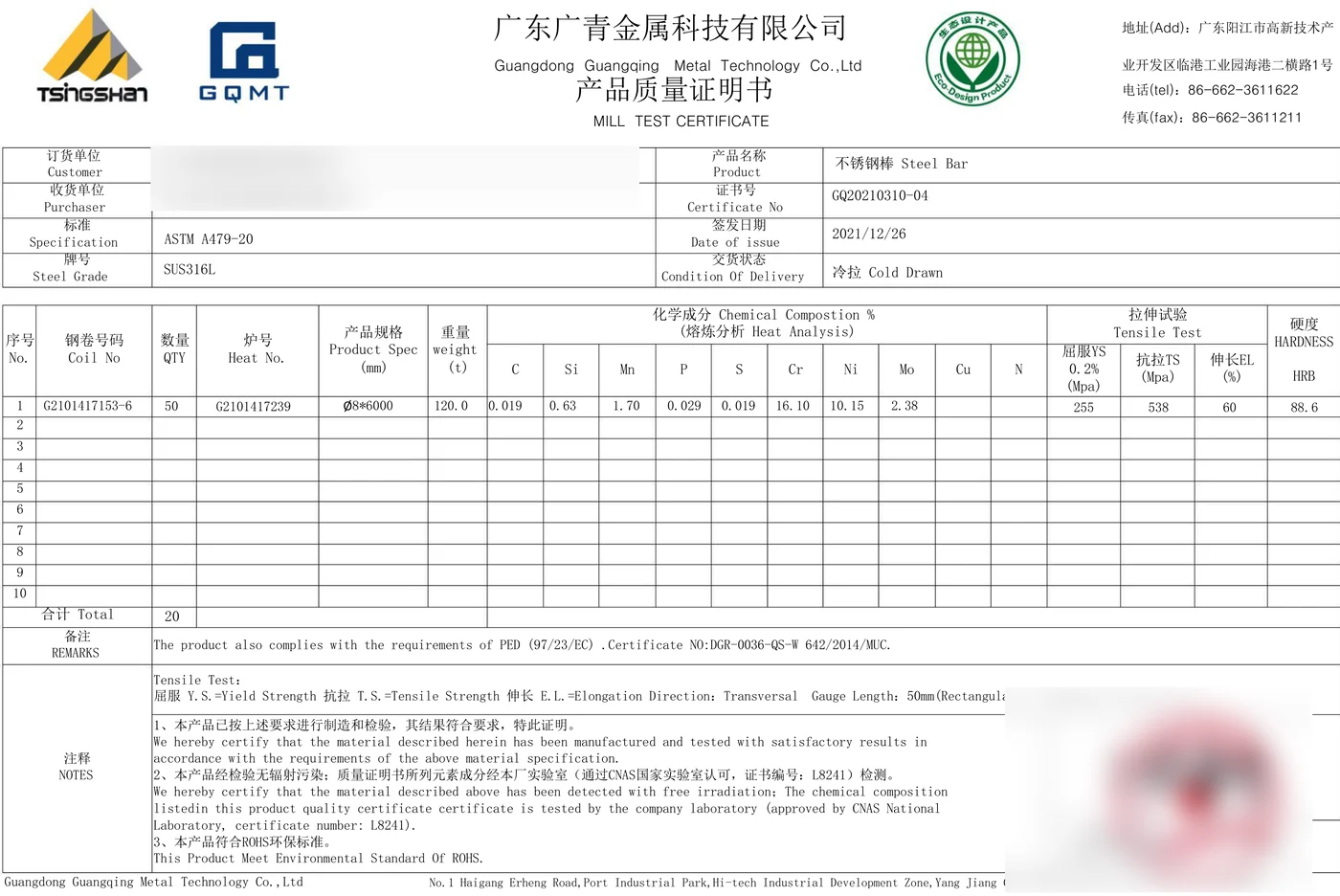
How we answer: by default we forward the certificate our bar supplier issues, which may be a generic one without a heat number. Ask for a heat-numbered certificate at quotation and we buy the bar with one. The certificates in our archive are issued to Chinese GB, ASTM and JIS standards, and none we reviewed names an EN 10204 type. If your contract names a type, put it on the RFQ, before the bar is bought.
Check the certificate against your drawing
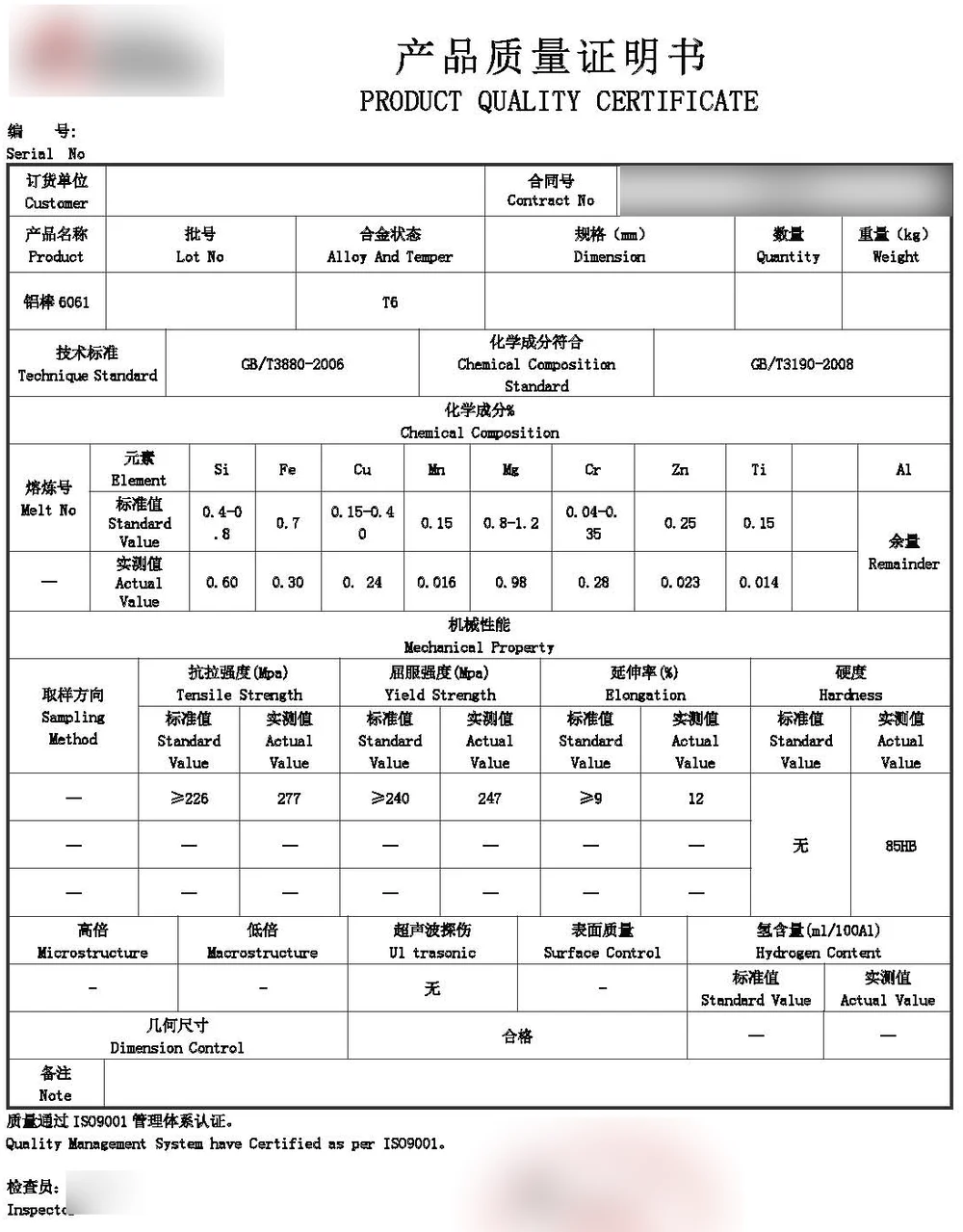
A mismatch in grade name is common and often harmless, because Chinese mills print GB designations; check that the chemistry also meets the standard on your drawing rather than reject the paper. A missing heat number, a size smaller than your stock, or chemistry outside the limits is not harmless. Grades we machine
The checklist below covers the fields that matter on a mill, distributor or generic certificate. Open the checklist
Trace the certificate to your parts
One heat of steel can make many tonnes of bar, and one bar becomes hundreds of turned parts. Ask whether one order is cut from one batch of material, so that a single certificate covers it.
How we answer: one order is machined from one incoming batch of material, and that batch’s supplier certificate goes with the order. During machining we also watch for bar that behaves wrongly: we have caught material whose cutting feel, colour and hardness did not match the grade, confirmed it by test and returned it to the supplier.
How to ask for material certificates for CNC turned parts
Write two things on the RFQ: the certificate type, and whether it must carry a heat number. If you need RoHS or REACH documents, name them too. Ask when the certificate is sent: a scan before shipment lets you check it while the parts are still at the factory. RFQ checklist for turned parts How to compare quotes on the same basis
How we answer: when you ask for a heat-numbered certificate at quotation, we order the material with one from our supplier; this can add days or cost. Certificates are free. We email a scan before shipment and send the paper copy with the goods. We can supply the material supplier’s RoHS report; if you need a REACH declaration, raise it at quotation. Send a drawing with your certificate requirement
What to check on a material certificate
| Grade | The grade on your drawing, or its counterpart. Chinese certificates often use the GB name: 022Cr17Ni12Mo2 for 316L, 06Cr19Ni10 for 304. The limits are close but not identical, so check the values against the standard on your drawing. |
|---|---|
| Standard | The standard the material was made and tested to, for example ASTM A479 or GB/T 1220. The limits you check against come from it. |
| Size and condition | A bar diameter at or above the stock your part needs, and the delivery condition: cold drawn, annealed, or a temper such as T6 for aluminium. |
| Heat or lot number | Present, and the same number as on the bar tag or packing list. Without it the certificate cannot be tied to any batch. |
| Chemistry | Every element inside the standard’s limits. The elements that define the grade matter most, such as molybdenum in 316L or sulphur in 303. |
| Mechanical properties | Tensile strength, yield strength, elongation and hardness against the standard, and against your drawing if it sets its own values. |
| Issuer | The mill or a distributor. A distributor certificate should attach the mill certificate or say its chemistry is copied from it. It may name the customer it was first issued to; the heat number, not the name, links it to the bar. |
Ready to bring it together?
Use the inquiry form to organize your part details and target quantities.
Prepare your inquiryPrepared by NOW CNC for production buyers. Manufacturing scope is defined by the reviewed drawing and accepted quotation.